Customer Kudos
"zZounds has never done me wrong and they have great customer service and support!"
August 1, 2026
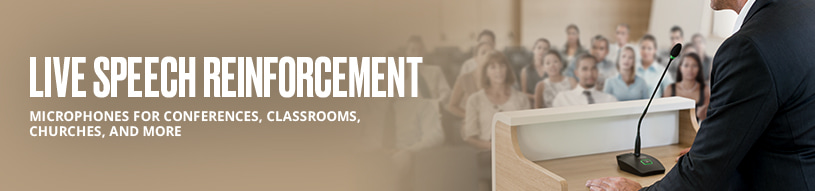
Microphones for Live Speech
Whether you're reinforcing a lecture, presentation, or worship service, this guide will help you find the microphones you need to make voices heard clearly! Follow our guide to learn more about a few popular types of mic you can use to reinforce live speech: wired and wireless podium microphones, earset microphones, lavalier microphones, boundary microphones, and hanging microphones.
Wireless Podium Microphones
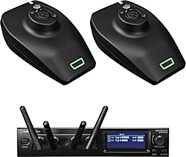
Add a gooseneck microphone to your podium or lectern without running cables on stage! These wireless systems make it easy to place a mic on a wireless transmitter base right where the presenter needs it, without adding trip hazards. Try placing the receiver box just offstage so it receives a clear signal from the transmitter base, then run a cable from the receiver to your stagebox or mixer.
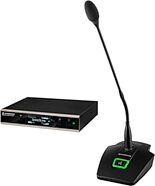
Sennheiser SL TS 153 GN-L Set DW Podium Gooseneck Wireless Microphone System
$1,829.00
- 12 payments of$152.42/mo
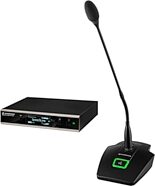
Sennheiser SL TS 133 GN Set DW Podium Gooseneck Wireless Microphone System
$1,729.00
- 12 payments of$144.08/mo
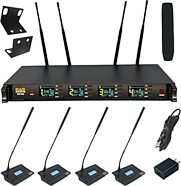
CAD Audio WX1400GN Four-Channel Wireless Gooseneck Microphone System
$499.99
- 8 payments of$62.50/mo
- No Credit Check6 payments of$83.33/mo
Gooseneck Podium Microphones
Great for permanent installations, these wired gooseneck microphones are ideal for reinforcing presenters at a podium or lectern. Thanks to their flexible goosenecks, these mics are easy for each presenter to adjust to their height (so you won't need to deliver the ol' crash course on how to raise or lower a mic stand.) If your podium has a built-in XLR input, you can choose a mic with a XLR plug built into the end of its gooseneck. When you need to place a mic on a desk or table that has no built-in XLR input, choose a gooseneck mic like the Shure Centraverse CVG12D-B/C model with an included desk stand.
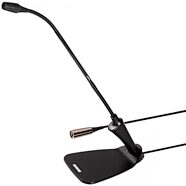
Shure Centraverse CVG12D-B/C Condenser Microphone with 12" Gooseneck and Desktop Base
$199.00
- No Credit Check6 payments of$33.17/mo
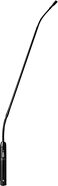
Shure MX418 Microflex Standard Gooseneck Microphone
$223.00
- No Credit Check6 payments of$37.17/mo
Comes in 2 Connector Types, 9 Mfg Models, 3 Pickup / Electronics Options, 2 Styles

Audio-Technica U857Q Cardioid Condenser Quick-Mount Gooseneck Microphone
$239.00
- No Credit Check6 payments of$39.83/mo
Comes in 2 Sizes/Lengths, 2 Mfg Models
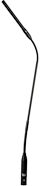
Audio-Technica U857Q UniLine Hypercardioid Condenser Quick-Mount Gooseneck Microphone
$319.00
- 8 payments of$39.88/mo
- No Credit Check6 payments of$53.17/mo
Comes in 2 Sizes/Lengths, 2 Mfg Models
Headset and Lavalier Microphones
What if your presenter prefers to walk around while speaking, instead of standing in one spot? A wireless headset microphone, also known as an earworn, headworn, or earset mic, gives them freedom of movement as long as they're within the range of the wireless system (and as long they're not standing right in front of a loudspeaker, which can lead to feedback.) Wireless headset microphones are a must for fitness instructors, and they're favored by all kinds of presenters who are active on stage and prefer to keep their hands free to gesture. Call it the "TED Talk" mic!
If a presenter wants to move around, and doesn't want to hold a mic, but doesn't like the look or feel of a mic over their ear, a lavalier mic clipped to the lapel, tie, or collar is the go-to solution.
Once your presenter is wearing their earset or lavalier mic, the mic always stays at a consistent distance from the sound source (the presenter's mouth, that is), which can be helpful for the person running sound, since the presenter cannot "drift" away from their microphone.
Lavalier and headset microphones with an omnidirectional pickup pattern are easiest to place on a presenter (since they're more forgiving of less-than-ideal placement), and they're an especially good choice when you're reinforcing solo presenters without a lot of other sound sources nearby that can bleed into the mic, such as a teacher in a relatively quiet lecture hall. Go with a tighter cardioid pickup pattern when your mic will need a lot of gain before feedback -- for example, if you're reinforcing a presenter in a crowded area with a lot of background noise, like a exhibit hall floor at a convention.
If you're building a system from scratch, look for a complete headset or lavalier wireless system that includes the microphone, transmitter, and receiver. Or if you already own a wireless system with a bodypack transmitter, you can add a separate headset microphone or a lavalier microphone to that system -- just look for the kind of cable connector your bodypack needs, such as a TQG/TA4F connector or 1/8" connector, to ensure you're choosing a mic that can plug into the pack.
If a presenter wants to move around, and doesn't want to hold a mic, but doesn't like the look or feel of a mic over their ear, a lavalier mic clipped to the lapel, tie, or collar is the go-to solution.
Once your presenter is wearing their earset or lavalier mic, the mic always stays at a consistent distance from the sound source (the presenter's mouth, that is), which can be helpful for the person running sound, since the presenter cannot "drift" away from their microphone.
Lavalier and headset microphones with an omnidirectional pickup pattern are easiest to place on a presenter (since they're more forgiving of less-than-ideal placement), and they're an especially good choice when you're reinforcing solo presenters without a lot of other sound sources nearby that can bleed into the mic, such as a teacher in a relatively quiet lecture hall. Go with a tighter cardioid pickup pattern when your mic will need a lot of gain before feedback -- for example, if you're reinforcing a presenter in a crowded area with a lot of background noise, like a exhibit hall floor at a convention.
If you're building a system from scratch, look for a complete headset or lavalier wireless system that includes the microphone, transmitter, and receiver. Or if you already own a wireless system with a bodypack transmitter, you can add a separate headset microphone or a lavalier microphone to that system -- just look for the kind of cable connector your bodypack needs, such as a TQG/TA4F connector or 1/8" connector, to ensure you're choosing a mic that can plug into the pack.
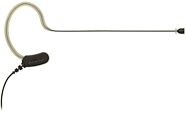
Shure MX153 Microflex Earset Headworn Condenser Microphone
$300.00
- 8 payments of$37.50/mo
- No Credit Check6 payments of$50.00/mo
Comes in 3 Colors, 3 Mfg Models
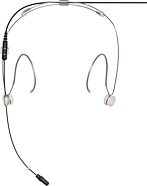
Shure DH5 Omni Condenser Headset Microphone
$439.00
- 8 payments of$54.88/mo
- No Credit Check6 payments of$73.17/mo
Comes in 3 Colors, 2 Connector Types
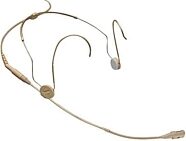
Sennheiser HSP 4-EW Cardioid MKE Headset Microphone
$629.00
- 12 payments of$52.42/mo
- No Credit Check6 payments of$104.83/mo
Comes in 2 Colors
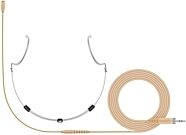
Sennheiser HSP Essential Omni Condenser Headset Microphone
$329.00
- 8 payments of$41.13/mo
- No Credit Check6 payments of$54.83/mo
Comes in 2 Colors
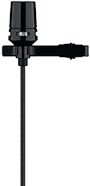
Shure CVL-B/C-TQG Centraverse Lavalier Condenser Microphone
$54.00
- No Credit Check4 payments of$13.50/mo
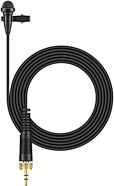
Sennheiser ME2 Omni Electret Condenser Lavalier Microphone
$139.00
- No Credit Check6 payments of$23.17/mo

Shure WL183M Omnidirectional Lavalier Microphone, TQG/TA4F Connector
$153.00
- No Credit Check6 payments of$25.50/mo
Comes in 2 Colors
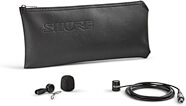
Shure WL183M Omnidirectional Lavalier Microphone, LEMO Connector
$175.00
- No Credit Check6 payments of$29.17/mo
Comes in 2 Colors
Boundary Microphones for Conference Tables and More
Need to mic up a group gathered around a table for a panel discussion? When you can't give everyone their own personal mic, a boundary microphone is a great solution. A boundary microphone, sometimes known as a pressure zone microphone, is a specialized kind of condenser mic that can sit flat on a table. While a conventional mic is susceptible to unwanted acoustic reflections from the tabletop, resulting in comb-filtering that can muddy your signal, boundary mics are immune to this particular kind of interference due to their clever design, with the mic diaphragm facing the flat plate that's part of the mic's housing. Plus, their low-profile design makes them visually unobtrusive -- a plus if you're shooting video or photos of an event.
Because they're so popular for conferencing, some boundary mics include a physical switch that a presenter can use to mute the mic or push-to-talk.
Boundary mics are versatile tools. In addition to placing them on conference tables and desks, boundary mics can be mounted directly on a stage floor. In the music world, you'll find audio engineers placing boundary mics inside kick drums or taped to the inside of a piano lid.
Choose a boundary mic with an omnidirectional pickup pattern if you need 360-degree coverage around a table. Choose a mic with a cardioid pickup pattern if you want to mic just one side of a desk or table, or a smaller area like a podium, while rejecting ambient sound to the sides and rear.
Because they're so popular for conferencing, some boundary mics include a physical switch that a presenter can use to mute the mic or push-to-talk.
Boundary mics are versatile tools. In addition to placing them on conference tables and desks, boundary mics can be mounted directly on a stage floor. In the music world, you'll find audio engineers placing boundary mics inside kick drums or taped to the inside of a piano lid.
Choose a boundary mic with an omnidirectional pickup pattern if you need 360-degree coverage around a table. Choose a mic with a cardioid pickup pattern if you want to mic just one side of a desk or table, or a smaller area like a podium, while rejecting ambient sound to the sides and rear.
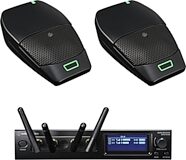
Audio-Technica ATW-1426 System 20 PRO Dual Boundary Microphone Wireless System
$1,539.00
- 12 payments of$128.25/mo
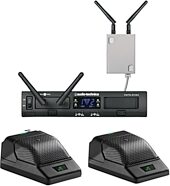
Audio-Technica ATW1366 System 10 Boundary Microphone System
$904.95
- No Credit Check6 payments of$150.82/mo
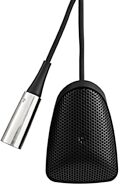
Shure Centraverse CVB-B/O Omnidirectional Boundary Microphone
$112.95
- No Credit Check6 payments of$18.82/mo

Shure MX392 Microflex Boundary Microphone
$316.00
- 8 payments of$39.50/mo
- No Credit Check6 payments of$52.67/mo
Comes in 2 Connector Types, 6 Mfg Models, 3 Styles
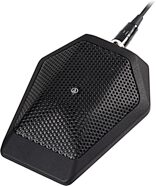
Audio-Technica U851Rb Cardioid Condenser Boundary Microphone
$259.00
- No Credit Check6 payments of$43.17/mo
Comes in 2 Colors
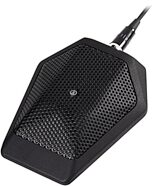
Audio-Technica U851RbO Omnidirectional Condenser Boundary Microphone
$259.00
- No Credit Check6 payments of$43.17/mo
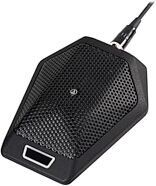
Audio-Technica U891Rb Cardioid Condenser Boundary Microphone with Switch
$349.00
- 8 payments of$43.63/mo
- No Credit Check6 payments of$58.17/mo
Comes in 2 Colors, 2 Mfg Models
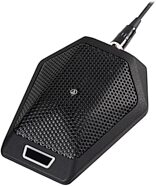
Audio-Technica U891Rb Omnidirectional Condenser Boundary Microphone with Switch
$349.00
- 8 payments of$43.63/mo
- No Credit Check6 payments of$58.17/mo
Hanging Microphones
Sometimes known as "choir" mics, hanging microphones are designed to hang from the ceiling of a performance space. They're useful for picking up wider areas where it wouldn't make sense to put an individual mic on each performer -- such as a choir or orchestra -- or in "audience participation" applications, such as when you want to mic a house of worship's congregation. When you need to get a mic up high above a group, but you don't want to worry about knocking over a tall mic stand, hanging microphones are the way to go. If you're livestreaming or recording, hanging mics are great for picking up the live ambiance of the space, giving listeners that "you are here" quality. Use caution when feeding these mics through a sound reinforcement PA system -- they'll be quite susceptible to feedback, as they're generally going to be placed relatively far from the source they're picking up.
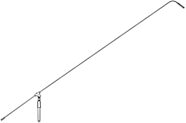
Audix MB8450 MicroBoom System with M1250B Choir Microphone and Carbon Fiber Boom
$719.00
- 12 payments of$59.92/mo
- No Credit Check6 payments of$119.83/mo
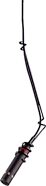
Audio-Technica Pro 45 Hanging Condenser Microphone
$109.00
- No Credit Check6 payments of$18.17/mo
Comes in 2 Colors

Audio-Technica U853R Cardioid Condenser Hanging Microphone
$229.00
- No Credit Check6 payments of$38.17/mo
Comes in 2 Colors, 2 Mfg Models